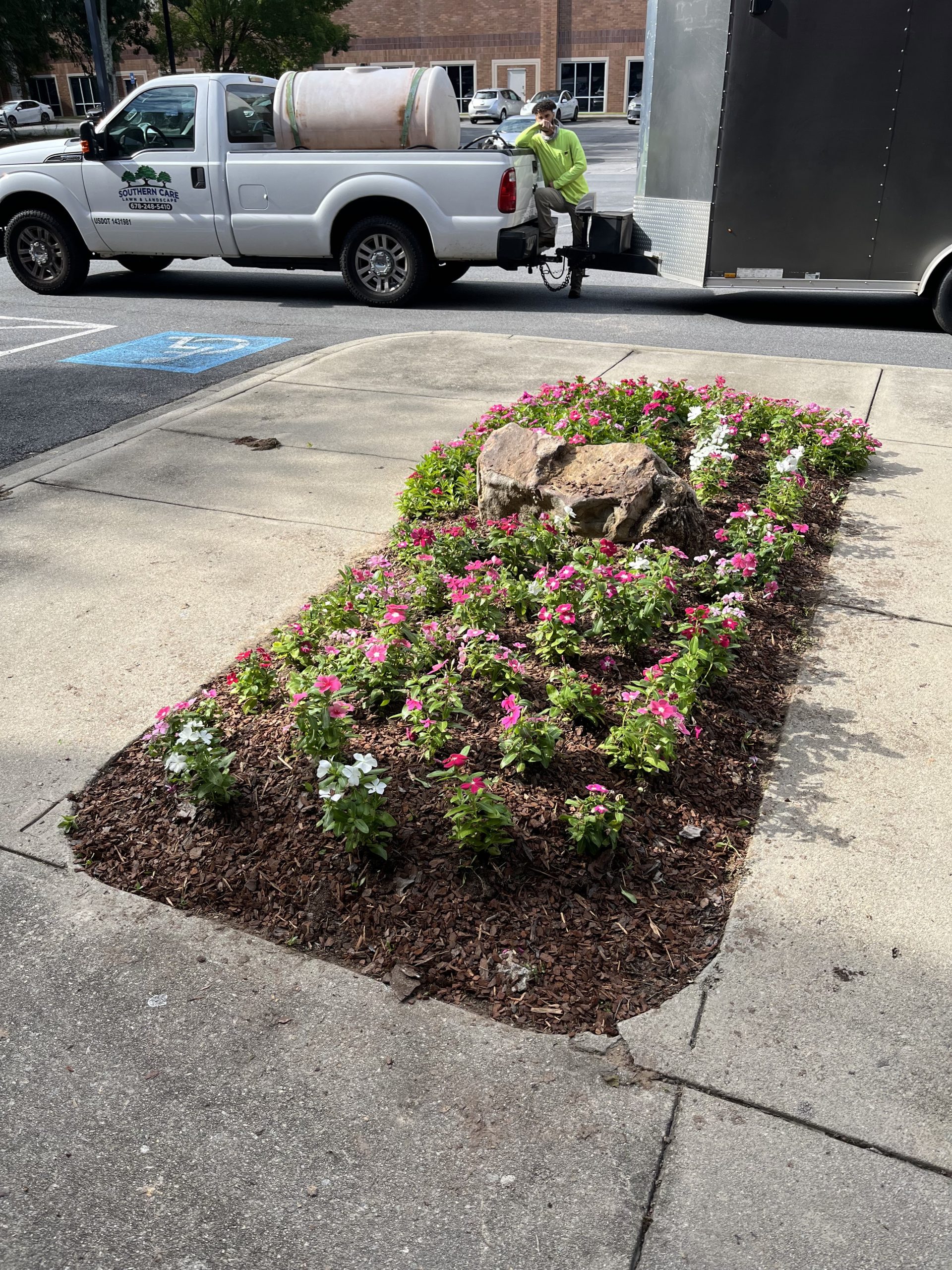
Seasonal Color & Annual Flower Installation from Southern Care Lawn & Landscape, Inc. covers planning, planting, and changing out annual color for commercial properties around Buford, Georgia. It is for property owners and managers who want entrances, signs, planters, and bed borders to look fresh in every season. To get started, call or send a request and we will talk through the property and the beds you want to feature.
Maybe the pansies at your front entrance gave out when the first hot stretch hit. Maybe the beds by the monument sign have sat bare between seasons, or the annuals look leggy and washed out while tenants and visitors walk past. Color is the first thing people notice at a building. A clear plan for what goes in, when it goes in, and when it comes out fixes that.
When Annual Flowers Need Replacing
Most properties know it is time for a changeout when they see one or more of these:
- Flowers that have stopped blooming and look stringy or stretched
- Bare soil or old mulch in beds that are supposed to show color
- Cool-season plants fading as Georgia heat arrives, or summer plants collapsing after the first hard frost
- Planters at the entrance holding dead stems
- Color that no longer matches the building, signage, or the rest of the landscape
Seasonal color is meant to be temporary. Annuals bloom hard for one season, then they are replaced. That rhythm is what keeps a property looking current, and it is why timing matters as much as plant choice.
Color for every season
Buford sits in a part of Georgia with hot, humid summers and mild winters that still bring frost. That climate usually means two main plantings a year, with the exact timing depending on the weather that season.
Spring and summer color
Warm-season annuals typically go in once the risk of frost has passed, often in spring. Plants in this group are chosen to handle heat and sun, and many bloom steadily through the summer. Sun exposure, reflected heat from pavement, and available water all affect which varieties will hold up on a particular property.
Fall and winter color
Cool-season annuals typically go in during fall and carry the beds through the colder months. They tolerate light frost and bring color when most of the landscape is dormant. A fall installation also gives a property something to show during the months when curb appeal can slip.
Where color pays off
You do not need to fill every bed. Color works best where people actually look:
- Main entrances. The first impression for tenants, customers, and visitors.
- Monument and building signs. Color around the base draws the eye to your name and address.
- Parking lot islands and walkways. A few well-placed beds break up pavement.
- Planters and containers. Good for patios, lobbies, and spots with no planting bed.
- Bed borders along main drives. Repeating color creates a consistent look along the approach.
Concentrating color in these spots usually looks better than spreading a thin layer across the whole site, and it makes the budget easier to manage.
Color versus other landscape work
Property managers sometimes lump color in with other landscape services, so here is where this page starts and stops.
- Seasonal color and annual flowers means replacing short-season plants in beds and containers. This page covers that.
- Landscape installation means new shrubs, trees, beds, and larger planting projects meant to last for years. It is a separate service we offer.
- Landscape maintenance means the routine care of the property. It is also a separate service. Annual color needs watering and attention between changeouts, so ask how that will be handled and who is responsible.
If you are not sure which one fits your property, describe what you see and we can help sort it out.
How a changeout goes
While every site is different, a seasonal color job normally follows this order:
- Walk the property. Identify the beds and planters, check sun and shade, and talk through colors and the look you want.
- Agree on a plan. Plant selection, bed locations, quantities, and timing are settled before anything is ordered.
- Clear the old color. Spent annuals come out and the bed is cleaned up.
- Prepare the bed. Soil is loosened and refreshed as needed. Much of this area has dense clay soil, so loosening it helps new roots get established.
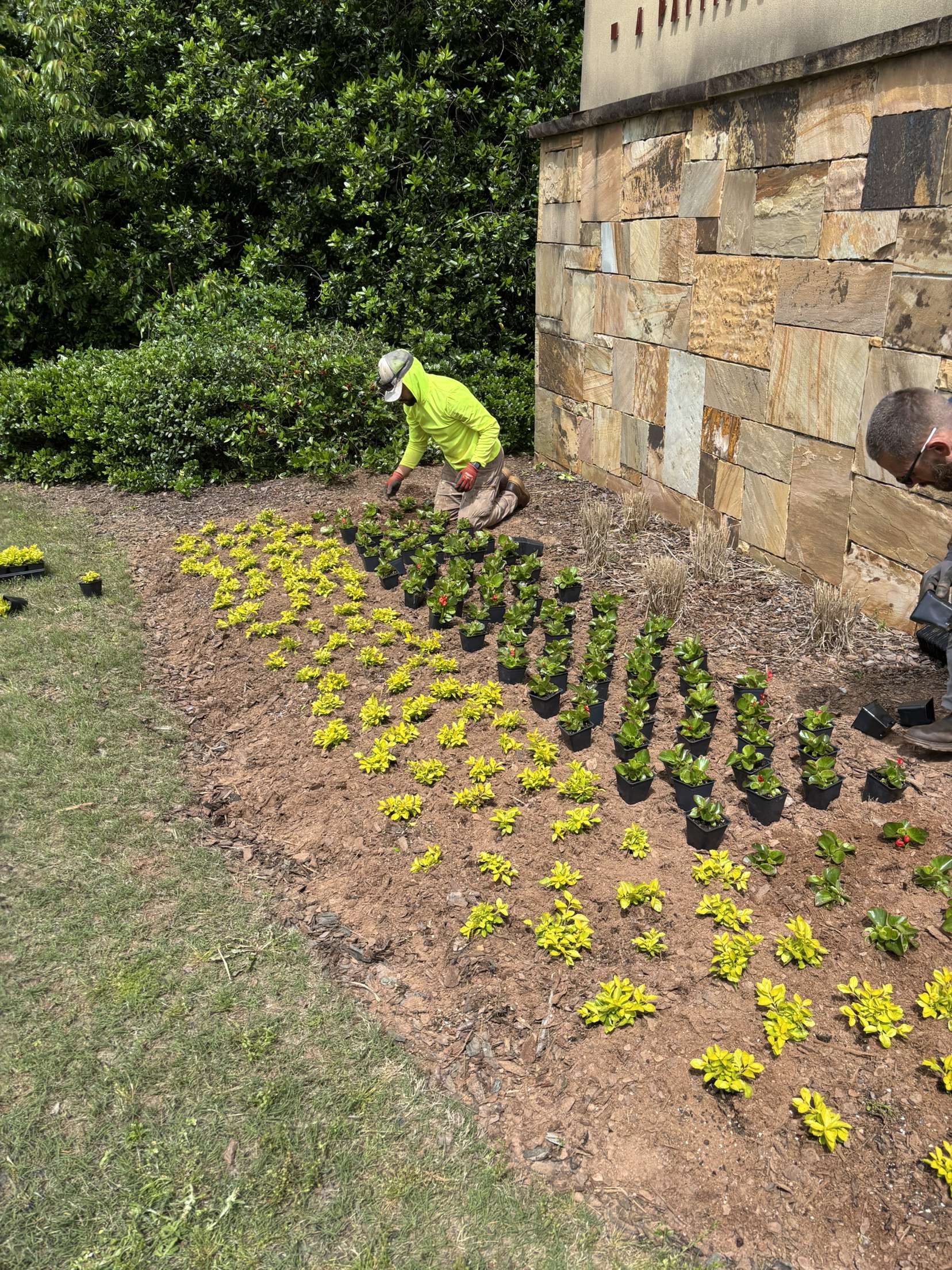
- Plant and water in. New annuals go in at spacing that will fill out, then get a first thorough watering.
- Finish and clean up. Debris is removed and bed edges are tidied so the finished look is clean.
If the site has an irrigation system, it is worth checking that the zones reach the color beds, since annuals have shallow roots and dry out quickly. Irrigation is a service we offer, so ask us if coverage looks uneven.
What affects the cost
Two color jobs can look similar and still be priced very differently. The main factors are:
- The number and size of beds and planters
- Plant type and size, since larger or specialty plants cost more than basic ones
- Plant spacing and overall density
- How many changeouts you want each year
- Condition of existing beds, including soil work or removing old plants
- Whether irrigation reaches the beds or watering will be done by hand
- Access to the site and how spread out the beds are
A clear written quote should spell out the scope, the number of installations, the plant varieties or color scheme, the quantities, and what is included for removal and cleanup. It should also say how changes are handled if you add a bed, switch colors, or adjust the schedule once work is underway.
Doing it well
Whoever does the work, these standards tell you whether the job was done right:
- Timing matches the weather. Warm-season plants should not go in ahead of a late frost, and cool-season plants should be in early enough to establish before hard cold.
- Beds are prepared first. Old plants are fully removed and the soil is worked up, not just planted over.
- Spacing is intentional. Plants should be set to fill in, not packed so tightly they compete or spaced so far apart the bed looks empty for weeks.
- Plants are watered in at install. Newly set annuals need a deep first watering and a plan for the days after.
- The site is left clean. Pots, trimmings, and spent plants should be gone when the crew leaves, with bed edges looking crisp.
Questions to ask first
Before hiring anyone for seasonal color around Buford, ask:
- What exactly is included? Ask whether the price covers plants, soil prep, removal of old color, hauling, and the first watering.
- Do you hold any license or permit that applies to this work, and do you carry insurance? Ask for proof if it matters for your property or lease.
- How many changeouts does the quote cover? Make sure the seasons and timing are written down.
- Who waters and cares for the plants between installs? This is where many color plans quietly fall apart.
- How will we communicate about scheduling and changes? Find out who your contact is and how adjustments get handled.
Common questions
When should seasonal color go in around Buford?
Warm-season color typically goes in during spring after the danger of frost, and cool-season color typically goes in during fall. The right week depends on the weather, so a provider should watch the forecast instead of working from a fixed date.
How often do the beds get changed?
Many commercial properties change color twice a year, once for warm weather and once for cool weather. Some choose a single season for key beds, or add extra changeouts for high-visibility areas. The right number depends on your budget and how much the property relies on curb appeal.
How is pricing worked out?
Pricing follows the size and number of beds, the type and size of plants, how much bed preparation is needed, how often you want changeouts, and how easy the site is to access. A walkthrough lets us scope those things and put them in a written quote.
Do annuals need irrigation?
Annuals have shallow roots and typically need steady moisture, especially through Georgia summers. Beds that are covered by irrigation are easier to keep in good shape, while others may need hand watering. We can look at how your beds are watered when we walk the property.
Can color be added to existing beds or planters?
Yes. Color is often added to beds that already have shrubs and mulch, or to containers near entrances. It does not require redoing the whole landscape.
What happens to the old plants at changeout?
A changeout normally includes pulling out the spent plants and clearing the bed before new ones go in. Confirm that removal and disposal are listed in your quote so there are no surprises on the day of the work.
Request color for your property
If your Buford property needs fresh color at the entrance, along the main drive, or around the signs, call or send a request through this page. Southern Care Lawn & Landscape, Inc. serves commercial properties across Georgia and Metro Atlanta, and we will walk your beds with you, talk through the season ahead, and put the plan in writing.