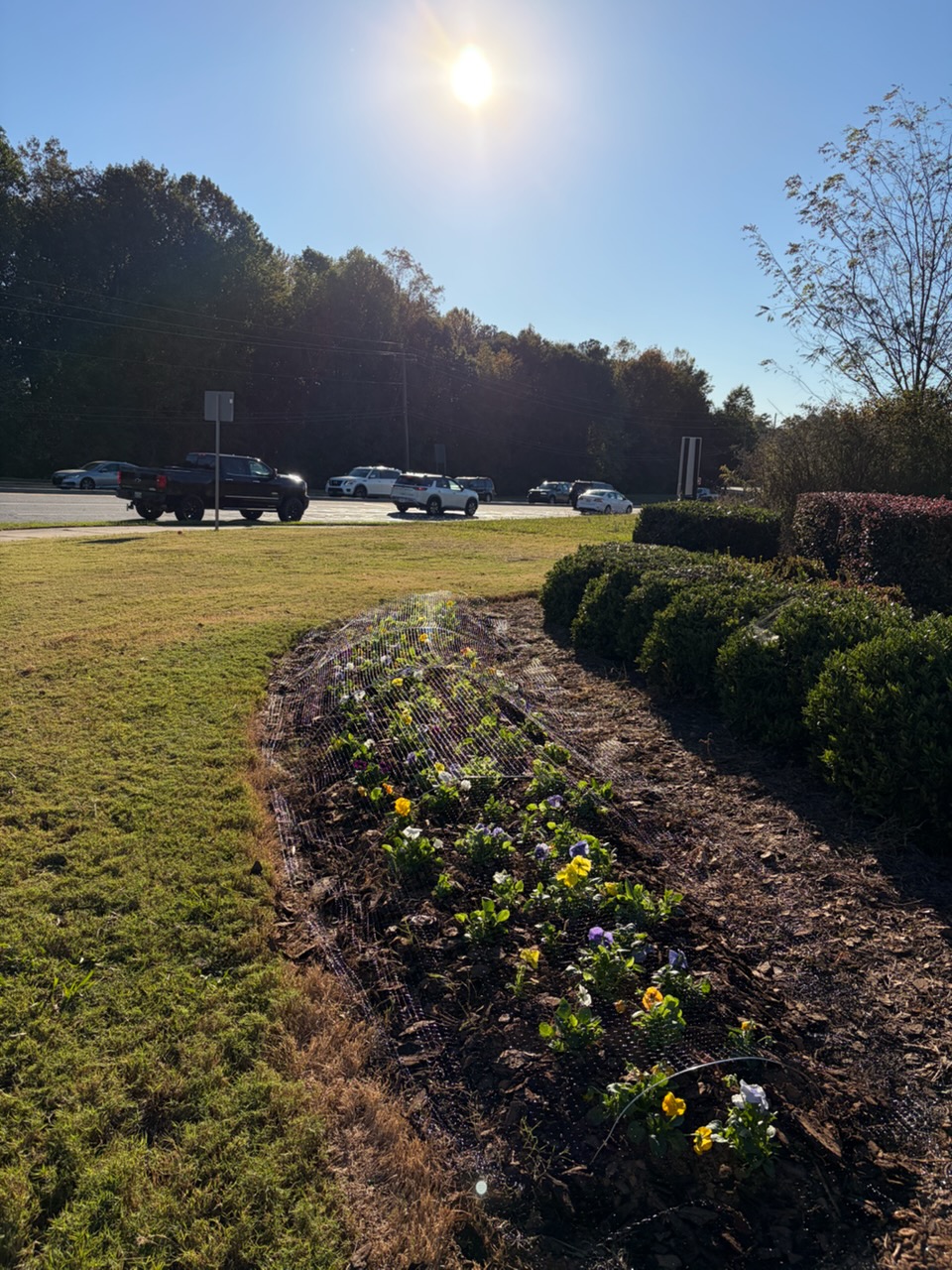
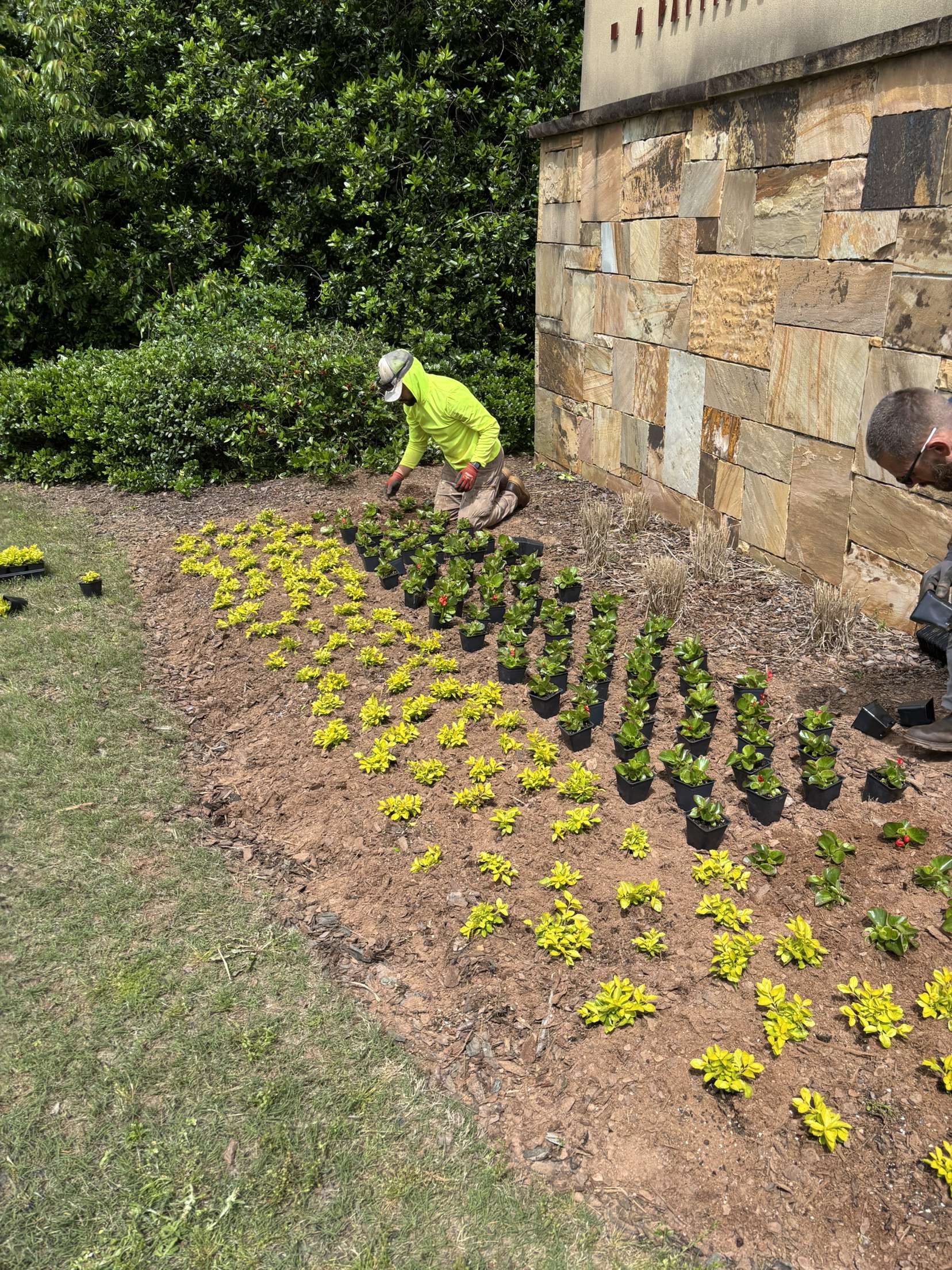
Southern Care Lawn & Landscape, Inc. provides commercial landscape maintenance in Buford, Georgia for offices, retail centers, apartment communities, medical buildings, and other business properties that need steady mowing, trimming, bed care, and seasonal cleanup. Property owners and managers can call or send a request, and we will talk through the site and shape the scope around what it actually needs.
You usually notice the problem before you can name it. The turf looks ragged by Thursday, shrubs are blocking signs and sightlines, beds fill with weeds after every summer storm, and leaves pile against entrances. Tenants and visitors judge the property in the first ten seconds, and a crew that comes and goes without anyone owning the result is hard to manage. Reliable recurring care fixes that, and the first step is a conversation about what your property looks like today and what you want it to look like.
What Is Included
Commercial landscape maintenance is the recurring care that keeps an established landscape clean, healthy, and consistent from one week to the next. The exact scope depends on the property, but most programs draw from this list:
- Lawn mowing at a height suited to the turf type, with edging along curbs, walks, and beds
- String trimming around poles, signs, fences, and tight corners
- Shrub and hedge trimming, plus pruning of ornamental trees and small plantings
- Weeding and cleanup of planting beds
- Mulch or pine straw refreshes where the design calls for them
- Leaf, limb, and debris removal from lawns, beds, parking islands, and entrances
- Turf and bed treatments applied by licensed applicators when the scope includes them
- Walk-throughs to flag dead plants, thinning turf, or trouble spots before they spread
We maintain more than 200 commercial buildings every week, so the routine of keeping a large property tidy is familiar ground. The work is led by a degreed horticulturist, which matters when a plant looks wrong and someone needs to know why.
Signs You Need Help
Many properties wait too long to change providers. These are the common signals that the current arrangement is not working:
- Uneven cuts: Stripes, scalped high spots, and tall patches along fences show rushed or dull-blade mowing.
- Overgrown edges: Turf creeping onto pavement and shrubs touching walls or windows make a site look neglected fast.
- Bed weeds: If weeds return within days of a visit, the beds are not getting real cleanup.
- Thinning or browning turf: This can point to compaction, shade, or irrigation trouble that mowing alone will not fix.
- Unanswered calls: When no one responds to a concern, small problems become tenant complaints.
Buford Seasons and Your Property
Buford sits in the Georgia Piedmont, where soil is typically heavy red clay and summers are hot and humid. Most commercial turf here is a warm-season grass, with fescue common in shaded areas. That shapes how maintenance changes through the year.
Spring and summer
Growth ramps up quickly once temperatures climb, and weekly visits are typical through the peak growing season. Afternoon storms push weeds and turf growth, and hedges can lose their shape in a matter of weeks. This is also when drought stress shows up on lawns with weak irrigation coverage.
Fall and winter
Leaf drop from mature trees can bury turf and clog drains and parking lot edges. Warm-season grass slows down and goes dormant, so visit frequency often shifts toward cleanup, pruning, and bed preparation. Winter is a good time to plan mulch, renovations, and changes for spring.
Maintenance or Something Else?
Property managers often lump several landscape jobs together. Here is where this page stops:
- Maintenance is recurring care of what is already planted: mowing, trimming, weeding, cleanup.
- Landscape installation is new construction or renovation, such as new beds, trees, sod, or hardscape-adjacent planting.
- Irrigation services cover sprinkler systems, adjustments, and repairs.
- Seasonal color and annual flowers are planted and rotated as a separate scope.
- Drainage, lighting, and snow and ice removal are also separate services we offer.
If you are not sure which bucket your problem belongs in, describe what you are seeing and we will sort it out with you.
How Visits Work
A well-run commercial maintenance account starts with a look at the property: turf areas, bed lines, trees, trouble spots, and any areas with special appearance goals, such as a main entrance. From there, the scope gets defined, visits are scheduled around the growing season, and a foreman is responsible for the result on site. Ongoing communication matters as much as the mowing. Property managers should be able to report a concern and get a direct answer from someone who knows the site.
What Good Work Looks Like
Whoever you hire, you can judge the work by a few practical standards:
- Clean cuts: Sharp blades leave grass tips green rather than frayed and brown, and mowing patterns change so turf does not rut.
- Crisp edges: Lines along walks, curbs, and beds should be defined and consistent every visit.
- Right-timed pruning: Shrubs should be shaped to their natural form, not sheared into stumps, and cut at a time that suits each plant.
- Full cleanup: Clippings and debris should be cleared from pavement, entrances, and parking areas before the crew leaves.
- Follow-through: Problems noticed on site should be reported, not ignored until they become expensive.
What Affects Cost
Every commercial property is different, so a fair quote starts with the site itself. The main factors are:
- Total turf area and how many separate lawn sections there are
- Number, size, and condition of planting beds, shrubs, and trees
- Slopes, tight access, and obstacles that slow mowing and trimming
- Visit frequency, which usually changes by season
- Extras such as mulch, pine straw, turf treatments, or heavy leaf cleanup
- Current condition of the property, since overgrown sites may need a catch-up visit
A clear written quote should spell out the scope, how many visits are expected, which extras are included or priced separately, and how changes are handled if the site or your needs shift mid-season.
Questions to Ask Before Hiring
- Which licenses or permits apply? Ask what Georgia requires for any chemical application and request proof, along with proof of insurance.
- What exactly is included? Get a list of tasks per visit and what counts as an extra.
- How is scheduling handled? Ask about visit days, weather delays, and seasonal frequency changes.
- Who is my contact? You should know who answers when something needs attention.
- How do you handle changes? Ask how scope adjustments, added areas, or special events are priced and approved.
Serving Buford and Nearby
We work with commercial properties around Buford, including Suwanee, Flowery Branch, Oakwood, Gainesville, Lawrenceville, Duluth, Norcross, Johns Creek, Alpharetta, Cumming, and Jefferson. Our commitment is simple: big enough to handle any project, small enough to care about every detail. For a Buford property, that means reachable management and crews who know your site.
Common Questions
How often should a commercial property be serviced?
Most commercial lawns in this area get weekly visits during the main growing season, with less frequent visits when growth slows. The right rhythm depends on turf type, appearance goals, and how visible the property is.
When does the maintenance season start here?
Growth typically picks up in spring as soil warms, runs strong through summer, and tapers off in late fall. Cleanup and pruning work often continues through winter.
How is pricing worked out?
Pricing is based on property size, number of beds and plantings, access and slopes, visit frequency, and any extras. A site review lets us define the scope before a quote is written.
Does maintenance cover irrigation, seasonal color, or drainage?
Those are separate services that we also offer. They can be paired with maintenance, but each is scoped on its own.
Can we switch providers mid-season?
Most properties can change providers at any time, though your current agreement may have its own terms. Starting with a site conversation helps you compare scopes fairly.
What should I have ready when I reach out?
Helpful details include the property type, rough size, current problems, and your goals. Photos and any existing scope of work make the first conversation faster. Call or send a request to get started.