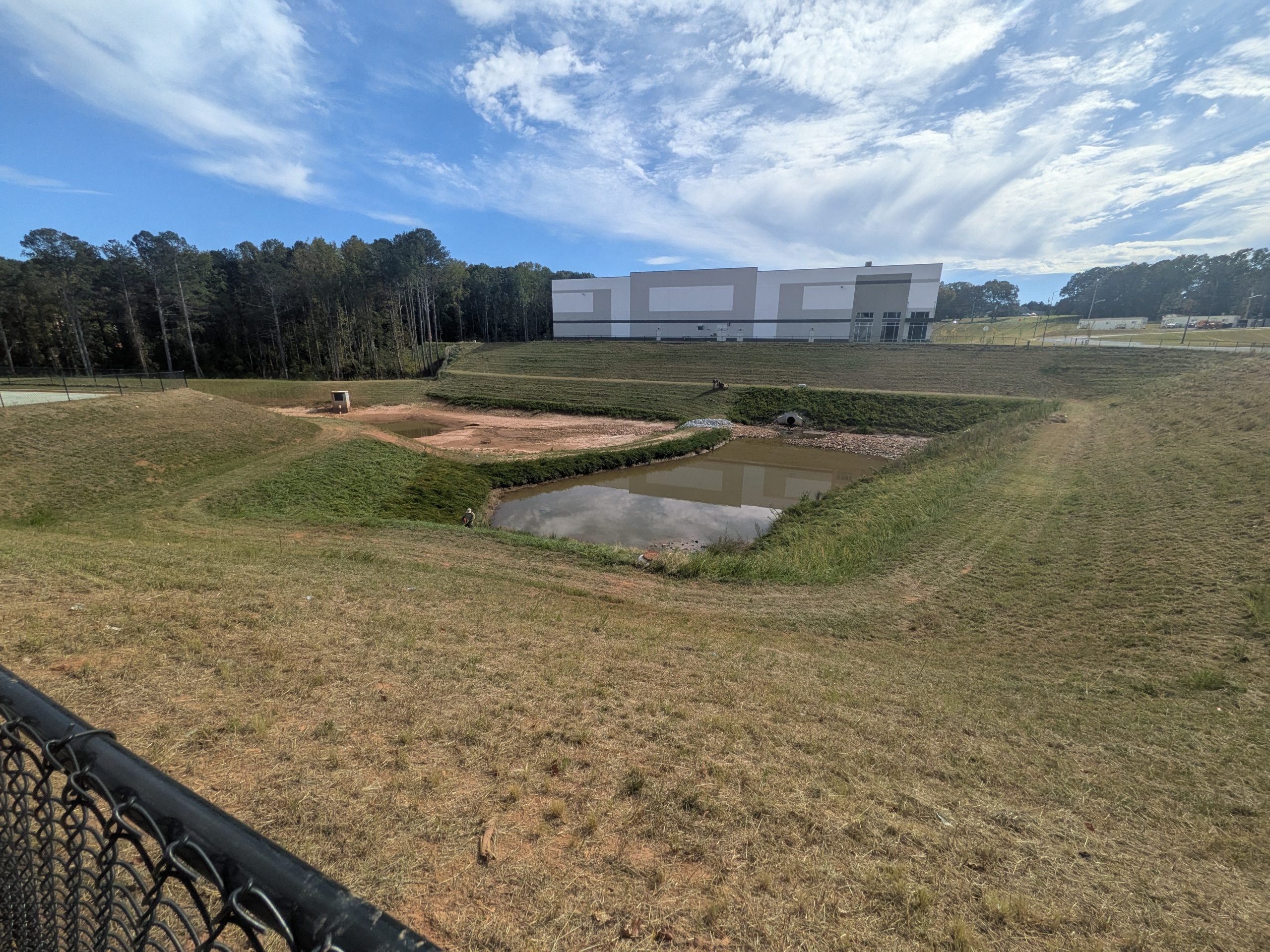
Stormwater detention ponds do a quiet job on commercial property. They hold runoff from roofs, parking lots, and drive aisles, then release it slowly so the surrounding ground and nearby drainage are not overwhelmed after a heavy rain. When a pond fills with sediment, trash, or dense growth, it stops doing that job well. Water sits longer, the outlet can clog, and the banks start to erode. Southern Care Lawn & Landscape, Inc. cleans and maintains detention ponds for commercial properties in Buford and across Georgia. If your pond looks shallow, smells, or drains slowly, call or send a request and we will talk through what you are seeing and arrange a site visit.
Pond problems tend to build slowly. A thin layer of silt becomes a bar near the inlet, then a cattail stand spreads across the shallow end, and by the time the water backs up toward a parking lot, the cleanup is much larger. Regular attention keeps the work smaller and the pond working the way it was designed to.
Signs your detention pond needs attention
Most pond trouble shows up at the surface before it shows up as a flooding problem. Walk the pond after a storm if you can, and watch for these signs:
- Water that stays standing for days after rain when it used to drain within a day or two
- Sediment bars or soft mud building up near the inlet pipes or channels
- Trash, bottles, bags, or yard debris caught on the banks or in the outlet area
- Dense cattails, reeds, or woody brush taking over the pond edge and the shallow zone
- Bank erosion, exposed roots, or slumping slopes around the water line
- Odors, algae scum, or a film of standing water near the outlet
- A grate, outlet structure, or pipe that looks partly blocked or buried
Any one of these can be minor. Several together usually mean the pond is holding less water than it should, and the outlet is working harder than it was built to.
Cleaning, vegetation control, and maintenance
Detention pond work usually falls into three kinds of jobs. Knowing which one fits your pond makes the first conversation easier.
Debris and trash removal
Trash and debris are cleared from the pond banks, the shallow zone, the inlet and outlet areas, and the trash racks or grates where they collect. Removing this material early keeps it from washing into the outlet and clogging the pipe during the next storm.
Sediment and silt removal
Sediment slowly takes up storage volume. Where buildup is heavy, the work may involve removing silt from the bottom of the pond or from the forebay, the area near the inlet that is meant to catch sediment first. Large removals are scoped during a site walk, because the amount of material, the access route, and where it can be hauled all change the plan.
Vegetation and bank care
Mowing, trimming, and selective removal of unwanted growth keep the banks stable and the outlet visible. Deep-rooted woody brush can weaken banks and block access, so it is cut back in a controlled way. Bare or eroded slopes are flagged so they can be repaired before the next rain washes more soil into the water.
How a typical pond visit works
Every pond is different in size, shape, and access, so we plan each visit around the site instead of running a standard routine.
- Walk the pond with you. You point out the problem areas, any spots that flood or drain slowly, and any access limits such as fencing, gates, or tenant parking.
- Check the inlets and outlet. The crew looks at the pipes, grates, and outlet structure to confirm where water is getting stuck.
- Clear the debris and growth. Trash, floating material, and unwanted vegetation are removed from the areas that affect flow.
- Handle sediment where needed. Heavy silt is removed or flagged for a separate scope, depending on how much material is present.
- Review the results with you. We walk the site before we leave, explain what was cleared, and point out any erosion or repairs that should be planned.
Why regular pond care matters
A detention pond only works when it has room to hold water and an outlet that moves it out at the right rate. Sediment and debris reduce both. Over time, a neglected pond can overflow during storms it was designed to handle, leave standing water that breeds mosquitoes, or put stress on the surrounding landscape. Routine checks after heavy rain and seasonal clean-ups help catch these issues while they are still small.
Scheduling depends on the pond. Some properties benefit from a check after each major storm season, while others need attention only once or twice a year. We will talk through what your pond needs and suggest a plan that fits, without adding work you did not ask for.
Working around your property
Commercial ponds sit next to parking lots, loading areas, and entrances. Crews need access to the pond edge and outlet, but customers, tenants, and deliveries still need to get through. We plan the visit around your operations, so tell us which hours are busiest and which areas must stay clear. Work can often be scheduled before opening or after the close of business when that is the better fit.
Pond maintenance or drainage repair?
Ponds that drain slowly are sometimes blamed on the pond when the real cause is a crushed pipe, a grade problem, or water flowing into the site from somewhere else. Cleaning and maintenance restore the pond as designed. If a site visit shows a larger drainage problem, we will say so plainly and can talk through our
landscape drainage solutions as a separate job.
Ongoing mowing and bed care around the pond can be folded into our
commercial landscape maintenance service, and litter that builds up on the banks can be cleared with our
debris and trash removal work.
Georgia rain and clay soils
Georgia storms often arrive in heavy bursts, and many commercial sites sit on clay-heavy soil that absorbs water slowly. That combination pushes a lot of sediment and debris into detention ponds in a short time. Checking the pond after major storms, and not only at the end of the season, is one of the simplest ways to keep it working during the next event.
What to expect from good pond work
Whoever handles the work, you can judge it by a few practical standards:
- The outlet is clear. Grates, pipes, and the outlet area should be free of debris and visibly open after the work.
- Growth is controlled, not stripped. Unwanted vegetation is managed so the banks stay stable and the pond keeps its planned function.
- Banks are checked. Eroded or bare slopes are identified, and any repair work is discussed before it happens.
- Material is removed from the site. Trash, debris, and silt should not be left on the banks or pushed back into the water.
- You get a plain explanation. A good provider tells you what was found, what was cleared, and what to watch after the next storm.
What affects the scope and cost
Pond work is priced on the actual conditions at the site, so a fair proposal usually follows a walk of the pond. The main factors are:
- Pond size, depth, and how much of the bank and shallow zone needs work
- Amount of sediment, debris, or growth that must be removed
- Access for crews and equipment, including fencing, slopes, and gates
- Where removed material can be placed or hauled from the site
- Outlet and inlet conditions, including any blocked or damaged structures
- Scheduling needs around tenants, customers, and daily operations
A clear written proposal should show the scope of work, what is included and excluded, any items that need a separate approval, and how changes will be handled if more material or damage is found during the work.
Questions to ask before you hire
- What is included in the proposal? Ask whether debris removal, sediment removal, vegetation control, hauling, and cleanup are all covered.
- How will material be removed and disposed of? Ask where silt and debris go and whether the site is left clean.
- How will you document the pond condition? Before and after notes or photos help you track the pond over time.
- How will access and scheduling be handled? You want to know when crews will arrive and how the work fits around your property.
- How will you handle items you did not expect? You should hear about extra material or erosion before it is addressed, not after.
Detention pond FAQ
How often should a detention pond be cleaned?
There is no single schedule that fits every pond. Many commercial ponds benefit from a check after the major storm seasons, along with a cleanup when debris or sediment starts to slow drainage. We will suggest a schedule based on what we see during the first visit.
How do I know if my pond needs sediment removed?
Water that stays standing longer than it should, or silt bars near the inlets, are the usual signs. Sediment depth is best confirmed during a site walk, since the amount of material determines the scope of work.
Can you clear cattails and other growth from the pond edge?
Yes. Vegetation along the banks and shallow zone can be managed so the outlet stays visible and the banks stay stable. We will explain what is being removed and what is being kept, so the pond keeps its planned function.
Will the work leave my property clean?
The goal is to leave trash, debris, and removed material off the banks and out of the water. We check the surrounding landscape afterward and point out any erosion or turf damage that should be repaired.
Can the work be done without blocking my tenants or customers?
We plan access around your operations. Tell us which entrances, parking spaces, and hours need to stay open, and we will schedule the visit around them.
Is pond cleaning the same as drainage repair?
Not always. A pond that drains slowly can have a clogged outlet, which is a maintenance job, or a damaged pipe or grade problem, which is a drainage job. A site visit will show which one applies, and we will tell you plainly if the work falls under a different service.
How do I get started?
Call or send a request describing the pond, where water is slow to drain, and any erosion or debris you have noticed. From there we can plan a site walk and talk through cleaning, maintenance, or a larger scope for your property.