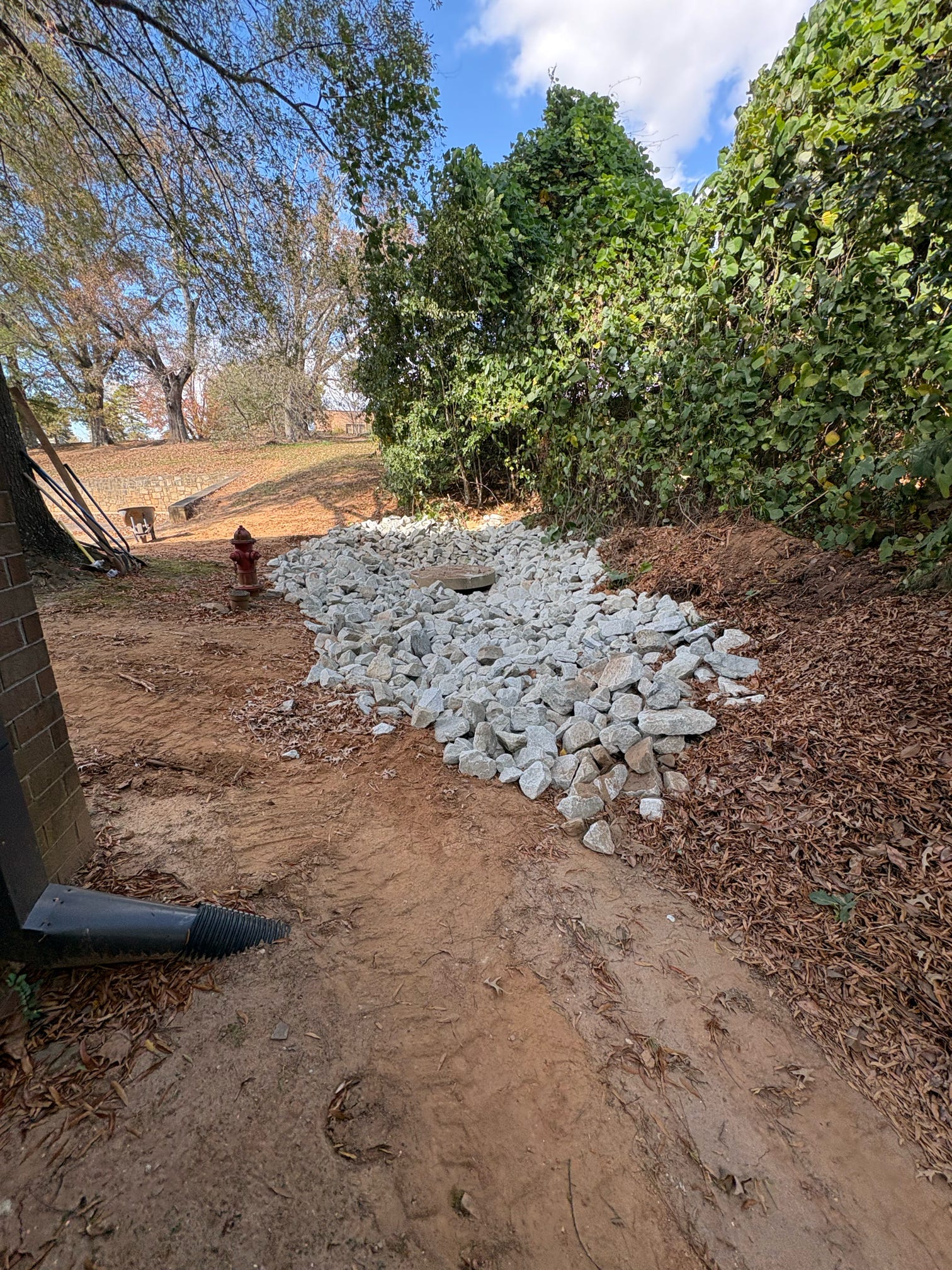
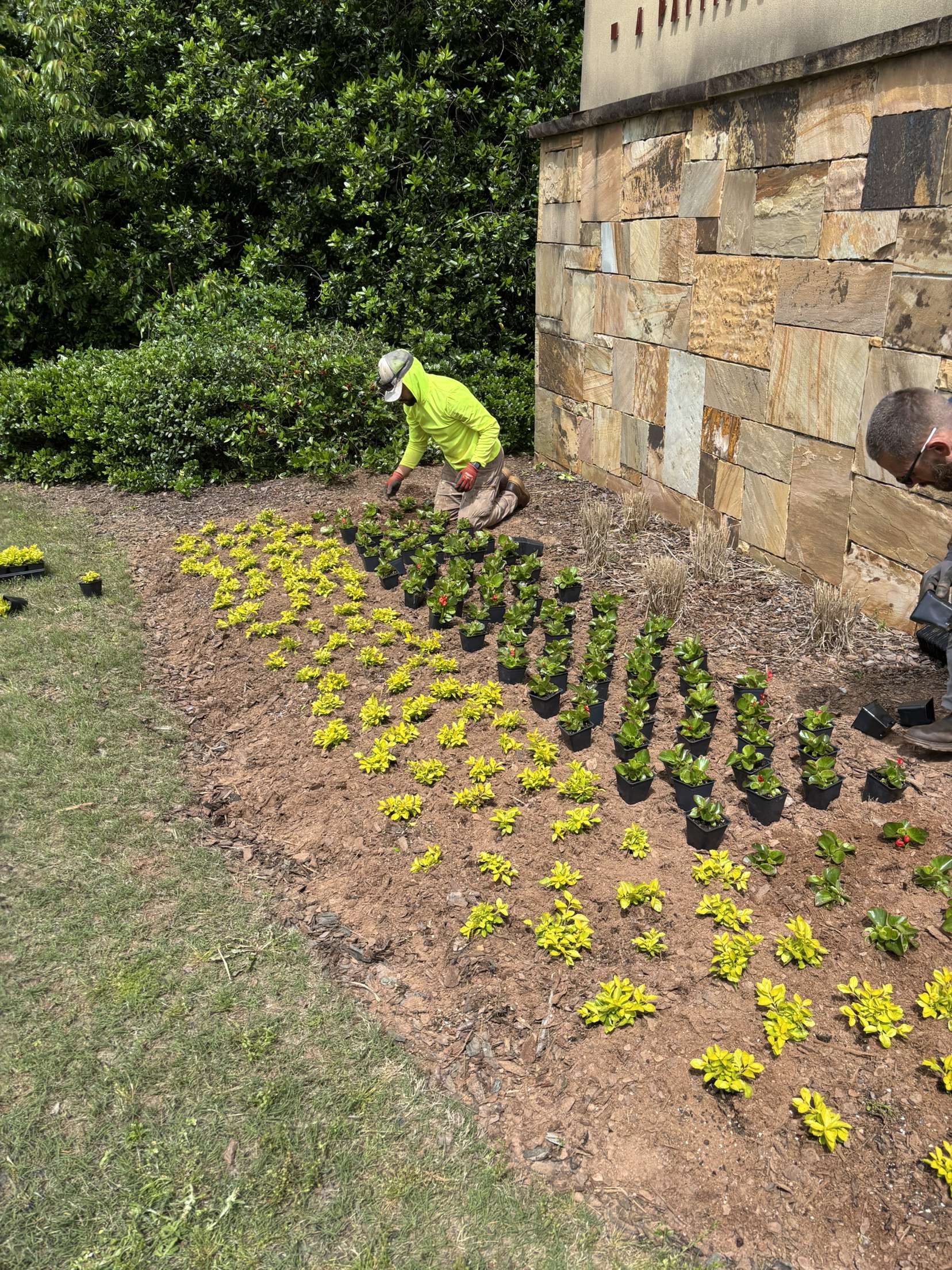
Southern Care Lawn & Landscape, Inc. provides landscape drainage solutions for commercial properties in Buford, Georgia, including fixes for standing water, soggy turf, washed-out beds, and runoff that collects against buildings or across parking areas. This service is for property owners and managers who keep seeing the same wet spots after every storm. To get started, call or send a request and describe where the water collects and when.
Maybe the lawn near the entrance stays squishy for days after rain. Maybe mulch keeps washing onto the sidewalk, or a downspout dumps water right where customers walk. These problems rarely fix themselves, and they usually get worse each season as soil erodes and low spots deepen. The next step is a close look at how water actually moves across your site, then a plan to send it somewhere it can do no harm.
Common drainage problems
Water follows the easiest path downhill, and on a commercial site that path often runs across turf, through planting beds, and over pavement. Most of the calls we hear about fall into a few patterns.
Standing water and soggy turf
Puddles that remain a day or two after rain point to a low spot, compacted soil, or a lack of any outlet. Turf in these areas thins out, moss and weeds move in, and the ground may stay too soft to mow comfortably. Around Buford, many sites sit on dense clay-heavy soil that drains slowly, so water lingers longer than people expect.
Erosion and washouts
Fast-moving runoff carries soil and mulch with it. You may see exposed roots, gullies along a slope, silt on walkways, or bare strips where grass will not hold. Left alone, a small channel can grow into a deep cut after a few heavy storms.
Other signs worth noting:
- Water pooling against a foundation, retaining wall, or dumpster pad
- Downspouts that discharge onto turf or pavement with no place to go
- Parking lot edges where runoff undercuts landscaping
- Walkways that stay wet and turn slick, or icy in cold snaps
- Planting beds where shrubs yellow or decline from constant saturation
Drainage versus irrigation
People often confuse the two because both involve water and underground lines. Irrigation delivers water to plants on a schedule. Drainage removes excess water from the places it should not be. This page covers drainage. Irrigation is a separate service we also provide, so if you are also thinking about sprinkler coverage, ask and we can talk through both.
The two do connect. Overwatering from a poorly set sprinkler zone can mimic a drainage problem, and a true drainage problem can make a perfectly good irrigation system look like it is overwatering. Sorting out which one you have saves money.
Drainage fixes that work
No single fix suits every property. The right solution depends on the slope, soil, roof and pavement runoff, and where the water can safely go. Common approaches include:
- French drains to collect water below the surface and carry it away from a wet area
- Catch basins and channel drains to capture runoff at low points, walkways, and paved edges
- Downspout extensions and buried drain lines to move roof water well away from buildings and beds
- Regrading and swales to reshape the ground so water travels along a planned route
- Dry creek beds and rock-lined channels to handle heavy flow on slopes while looking natural
- Erosion repair with new soil, sod, plantings, or stone where water has already done damage
Often the answer is a combination, such as extending downspouts and adding a drain at the lowest point of a lawn.
How the work goes
While every site differs, a drainage project generally moves through these stages.
- Walk the site. Look at where water collects, where it comes from, and where it could exit. Rain-day observations from you or your maintenance staff help a great deal.
- Find the cause. Roof runoff, a low grade, compacted soil, and a blocked outlet each call for a different answer.
- Agree on a plan. The scope covers which fixes go where, what gets disturbed, and what gets restored.
- Install. Digging, laying pipe or drains, setting grade, and backfilling happen in the planned order.
- Restore the surface. Sod, seed, mulch, or plantings go back so the area looks finished.
- Watch the next rain. The real test is how the site handles a storm afterward.
Signs of quality work
Whoever you hire, here are practical standards for judging a drainage job.
- Water has a destination. A drain that dumps water against a neighbor, a curb, or another low spot only moves the problem.
- Slope is deliberate. Pipes and channels need consistent fall so water keeps moving rather than sitting.
- Access points are planned. Cleanouts and catch basins should be reachable so debris can be cleared later.
- Disturbed areas are restored. Trenches should be backfilled, compacted, and finished so they do not sink after the first few rains.
- The site is left clean. Excess soil, stone, and trimmed material should be hauled off or put to use, not left in piles.
What affects the cost
Drainage work varies widely, so a fair price comes from the details of your site, not a flat rule. The main factors are:
- How large the affected area is and how much water it receives
- Soil type, slope, and how deep or long the drain lines must run
- The type of fix: surface regrading costs differ from buried pipe and basins
- Access for equipment, and whether work crosses pavement, walks, or landscaping
- Materials such as pipe, stone, basins, and drain covers
- Restoration, including sod, plantings, or mulch
A clear written quote should spell out the scope of work, where each drain or grade change goes, what restoration is included, which extras are priced separately, and how changes are handled if the crew finds something unexpected underground, such as roots or buried lines.
Questions to ask first
Before you hire anyone for drainage work around Buford, ask:
- Does this kind of work require a license or permit here, and who handles it?
- Can you show current proof of insurance?
- What exactly is included, and what is priced as an extra?
- Where will the water go once it leaves my property's problem area?
- What is the schedule, and how will you work around tenants, customers, and parking?
- How will you keep me informed if the plan changes?
Drainage around Buford
North Georgia gets steady rainfall through much of the year, plus heavy summer downpours and the occasional long wet spell. Many sites in this part of the state have clay-rich soil that sheds water slowly, and rolling terrain sends runoff toward whatever sits at the bottom of a slope. Newer commercial developments can also pile more roof and pavement runoff onto small landscaped areas than they were built to absorb.
We serve commercial properties across Buford, Suwanee, Flowery Branch, Oakwood, Gainesville, Lawrenceville, Duluth, Norcross, Johns Creek, Alpharetta, Cumming, and Jefferson. Our crews already maintain landscapes across this region, so we see how a property behaves through the seasons, which helps when deciding where a drain belongs.
Common questions
How do I know if my property has a drainage problem?
Look for water that stays more than a day or two after rain, bare or thinning turf in the same spots, soil or mulch washing onto hard surfaces, and moisture along foundations or walls. If you see the same pattern repeatedly, it is worth a site visit.
How long does a drainage project take?
It depends on scope. A downspout extension or a small regrade is much quicker than a long French drain or a multi-area solution. Weather also matters, since wet ground slows digging. We can give you a realistic schedule once we see the site.
What time of year is right for drainage work?
Drainage can often be addressed through much of the year, though extremely wet or frozen ground slows progress. Many property managers prefer to act before the rainy stretches, and it helps to note where water collects during storms. After the work, it is wise to check the site during the next heavy rain.
How is drainage work priced?
Pricing is based on the size of the area, soil and slope, the type of solution, the length of drain lines, access for equipment, materials, and the restoration needed afterward. Your quote should list those items clearly.
Will the work tear up my landscaping?
Some disturbance is normal when trenching or regrading. The plan should cover how affected turf, beds, and plantings will be restored, and we can talk through that before work begins.
Do you handle sites outside Buford?
Yes. We work with commercial properties throughout Georgia and Metro Atlanta, including Suwanee, Duluth, Lawrenceville, and Gainesville. Call or send a request with your location and a short description of the problem, and we will take it from there.